Vast offers new docking adapter for large space stations
COLORADO SPRINGS - Commercial space station developer Vast unveiled a new docking interface the company is offering to the broader industry for future large stations and spacecraft.
Vast announced April 15 the Large Docking Adapter, an interface to allow large space station modules and spacecraft to dock with one another, overcoming the limitations of existing interfaces.
Max Haot, chief executive of Vast, said in an interview that the company doesn't plan to use the new adapter on Haven-1, its single-module space station launching next year, or the multi-module Haven-2 station it has proposed for NASA's Commercial Low Earth Orbit Destinations program. It is instead intended for future large modules or large spacecraft visiting them, like SpaceX's Starship.
Sign up for First Up: Get the latest updates on SpaceX, Artemis, NASA and more. From Jeff Foust, First Up is a recap of the day's space industry news, including civil, commercial, and military space developments.
By submitting this form, you agree to the SpaceNews privacy policy and terms and conditions and to receive email from us and our partners. You can opt-out at any time.
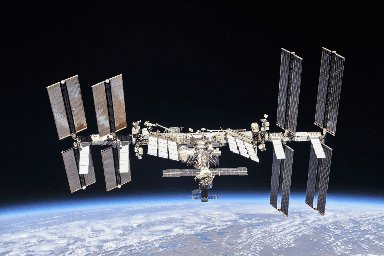
"There are a few challenges with the docking interface that exists today," he said, referring to the International Docking Adapter (IDA) used on the International Space Station for Crew Dragon and Starliner spacecraft. The narrow diameter of the adapter makes it difficult to transfer large cargo through the interface, and limits in rigidity create problems when docking large modules or vehicles.
"As we get to the Starship era or, hopefully, more large crew vehicles, that interface is inadequate," he said.
Vast's Large Docking Adapter is intended to address those issues. It has a diameter of 3.8 meters and increased rigidity that can support stations with up to 20 large modules.
The docking adapter can also serve as a launch vehicle separation system. "As you start to get to modules that are over 20 tons, when you want to launch them, there is no separation system in the industry above that," he said. "So, instead of having a separate separation system, you can put it on the other side on the launch vehicle, and then you use it to separate the module there."
The company embarked on the Large Docking Adapter after finding no other options for docking large modules. "We've looked everywhere," he said, finding that concepts for such adapters elsewhere had made little progress. "We've not really seen anything even reach the design and hardware stage."
Vast has developed a prototype of the Large Docking Adapter for six-degree-of-freedom testing at its Long Beach, California, facility. The company plans to publish an open-source standard for the adapter in May.
Haot said Vast plans to sell the docking adapter to companies or government agencies but is publishing the standard to allow them to build their own adapters compatible with it.
"Our goal at this stage is to invite any space agency, any cargo or crew vehicle manufacturer and any space station builders, including our competitors, to join the standard," he said. "We do not want to make it a Vast standard."
Vast will use the existing IDA interface on Haven-1 and Haven-2 but started the Large Docking Adapter work now to provide sufficient lead time for future large modules that can take advantage of it.
"Anything ambitious, such as that which also involves other stakeholders and so on, needs time," he said, including technical development and creation of a consortium of entities that will adopt it. "I hope we'll see it in a few years on a test module or something like it."
The Large Docking Adapter was one of two announcements Vast made during the 41st Space Symposium. The company revealed April 13 the design of the flight suits that crews visiting its space stations will wear.
The suit is based on the experience of astronauts who have flown on the ISS and features elements like pockets and fasteners optimized for the microgravity environment.
"The suit represents the crew and the mission, but it's also something astronauts can actually use day to day," Andrew Feustel, a former NASA astronaut who is Vast's lead astronaut, said in a statement. "This is the flight suit for the commercial, crewed spaceflight era, and it's really just the beginning."
Vielen Dank, dass Sie den Artikel gelesen haben!