NASA Invites Media to Northrop Grumman CRS-24 Station Resupply Launch

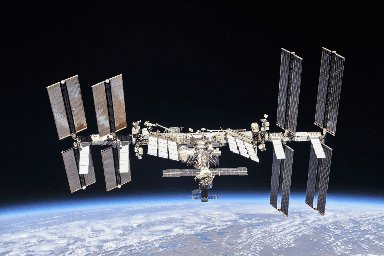
Media accreditation is open for the next launch to deliver NASA science investigations, supplies, and equipment to the International Space Station. A Northrop Grumman Cygnus XL spacecraft will launch in April to the orbital laboratory on a SpaceX Falcon 9 rocket for NASA.
The mission is known as NASA's Northrop Grumman Commercial Resupply Services 24 (NASA's Northrop Grumman CRS-24). Liftoff is targeted for no earlier than Wednesday, April 8, from Space Launch Complex 40 at Cape Canaveral Space Force Station in Florida.
Following launch, astronauts aboard the space station will use the Canadarm2 robotic arm to capture Cygnus and install the spacecraft to the Unity module's Earth-facing port for cargo unloading. The spacecraft will remain at the space station until October. This is the company's 24th spacecraft built to deliver supplies to the International Space Station under contract with NASA.
Credentialing to cover prelaunch and launch activities is open to U.S. media. The application deadline for U.S. citizens is 11:59 p.m. EDT, Wednesday, March 18. All accreditation requests must be submitted online at:
https://media.ksc.nasa.gov
In addition to food, supplies, and equipment for the crew, Cygnus will deliver research to the space station, including a new module to advance quantum science that could improve computing technology and aid in the search for dark matter and hardware to produce a greater number of therapeutic stem cells for blood diseases and cancer. Cygnus also will carry model organisms to study the gut microbiome and a receiver that could enhance space weather models that protect critical space infrastructure, such as GPS and radar.
Each resupply mission to the station delivers scientific investigations in the areas of biology and biotechnology, Earth and space science, physical sciences, and technology development and demonstrations. Cargo resupply from U.S. companies ensures a national capability to deliver scientific research to the space station, increasing NASA's ability to conduct new investigations aboard humanity's laboratory in space.
For more than 25 years, people have lived and worked continuously aboard the International Space Station, advancing scientific knowledge and making research breakthroughs that are not possible on Earth. The station is an important testbed for NASA to understand and overcome the challenges of long-duration spaceflight and to expand commercial opportunities in low Earth orbit. As commercial companies concentrate on providing human space transportation services and destinations as part of a strong low Earth orbit economy, NASA is focusing its resources on deep space missions to the Moon as part of the Artemis program to build on our foundation for the first crewed missions to Mars.
Learn more about International Space Station research and operations at:
https://www.nasa.gov/station
Vielen Dank, dass Sie den Artikel gelesen haben!