Is this the year for a NASA authorization bill?
Appropriators, like fans of hard-luck sports teams, say every year that this year will be different. That this will be the year that "regular order" returns to the appropriations process, where individual spending bills are passed by the House and Senate and reconciled in time to become law before the new fiscal year begins.
This is, once again, not that year. House appropriators have worked through a series of spending bills, including a commerce, justice and science (CJS) bill that rejects many of the budget cuts to NASA proposed by the White House in April. However, conflicts over other legislation make it unclear when the full House will take up those spending bills.
Senate appropriators, meanwhile, twice postponed in June the markup of its CJS bill, once because of disputes over Justice Department provisions in the bill and again when a key senator, Mitch McConnell (R-Ky.), fell ill. That has delayed consideration of the legislation until at least mid-July.
Those problems and a tight calendar - Congress will be off in August for summer recess and again in October in the runup to the November midterm elections - likely mean another year of continuing resolutions and omnibus spending packages. It also will make it difficult to pass other legislation not as pressing as appropriations bills.
That includes a NASA authorization bill. Leaders of the House Science Committee and the Senate Appropriations Committee said at the start of the current Congress last year that passing a NASA authorization was a priority. The last NASA authorization was in 2022, tucked into the CHIPS and Science Act; the last standalone NASA authorization was in 2017, passed a couple months into the first Trump administration.
Both committees approved versions of a NASA authorization bill earlier this year, and are working to reconcile their versions. Ironically, in highly polarized Washington, bipartisan support has proven easier than bicameral consensus.
"Our big focus right now is trying to come to an agreement with our Senate counterparts on a NASA authorization bill," said Brent Blevins, staff director of the House Science Committee's space subcommittee, at a National Academies meeting in early June.
Some of the schisms, he said, are "naturally occurring" differences in priorities between the committees. Others are linked to timing: The House bill made it out of committee in February, before NASA announced changes to the Artemis program like ending development of the upgraded SLS Block 1B. The Senate version was reported out of committee weeks later, and incorporated some of those changes.
Both, though, predate NASA's Ignition event in late March that made sweeping changes to Artemis. "We're thinking through some of the issues raised by NASA's Ignition announcements," Blevins said. "There were a lot of ambitious proposals in there."
Those initiatives, like the lunar base and nuclear propulsion demonstration mission, were not in NASA's budget request released a week and a half later. "We're trying to figure out how we're going to pay for some of this."
"NASA has a lot of changes going on," added Blevins' Democratic staff counterpart, Pam Whitney. "There's a lot happening all at once, and there are a lot of questions associated with how this all plays out."
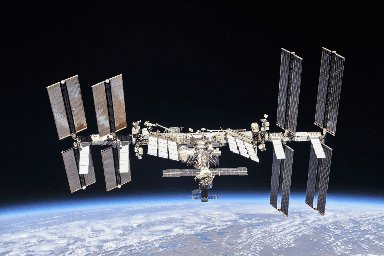
Neither went into details about the key points of debate between the House and Senate on the NASA authorization. Industry sources say how to implement, or alter, the plans NASA laid out at the Ignition event are key issues. Another is the future of the International Space Station: the Senate's bill extended the station's life by two years, to 2032, to give more time for commercial space stations to develop.
At the AIAA ASCEND conference in mid-May, Blevins said he was optimistic an authorization bill would pass. "I'm confident we're going to get there," he said. "We'll see something in weeks, not months." As of the end of June, a final version of the bill had yet to be released.
Otherwise, the space industry will utter the same refrain as those long-suffering fans: wait till next year.
This article first appeared in the July 2026 issue of SpaceNews Magazine.
Vielen Dank, dass Sie den Artikel gelesen haben!