Cardiac Research and Spacewalk Preps Before Cygnus XL Spacecraft Departs

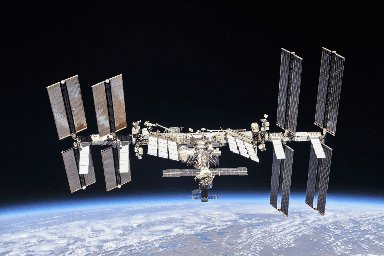
The Expedition 74 crew members spent Wednesday studying the cardiovascular system while preparing for a spacewalk to upgrade the orbital outpost's power generation system. A U.S. cargo spacecraft is also packed and ready for its departure from the International Space Station on Thursday.
NASA flight engineers Jessica Meir and Jack Hathaway kicked off their shift with vein scans inside the Columbus laboratory module. Meir led the Venous Flow biomedical study operating the new Ultrasound 3 device and scanning Hathaway's veins while he wore electrodes on his chest measuring his heart activity. Doctors are investigating space-caused blood flow changes that may lead to an increased risk of blood clots in astronauts.
Meir also partnered with flight engineer Sophie Adenot of ESA (European Space Agency) and filled out a questionnaire to document their sleep patterns then collected their saliva samples for preservation in a science freezer and later analysis. Meir later took a cognition test to understand how living in weightlessness affects a crew member's spatial orientation, visual tracking, decision making, and more for the Standard Measures study.
Adenot and Meir worked together throughout Wednesday readying the Cygnus XL cargo spacecraft for its detachment from the Unity module and release into Earth orbit at 7:05 a.m. on Thursday with the Canadarm2 robotic arm. Adenot configured hardware that will enable Cygnus XL to be disconnected from Unity then closed the spacecraft's hatch. Meir set up the equipment that will depressurize Cygnus XL in advance of its departure. NASA's live coverage of undocking and departure begins at 6:45 a.m. on NASA+, Amazon Prime, and the agency's YouTube channel. Learn how to watch NASA content through a variety of online platforms, including social media.
Meir's main task, however, was working with NASA flight engineer Chris Williams in the Quest airlock to configure the tools they will use on an upcoming spacewalk to ready the orbital outpost for a new roll-out solar array. Meir and Williams will work in the vacuum of space to install a modification kit and route cables on the port side of the orbital outpost. The external maintenance work will enable the next roll-out solar array to be installed on a later spacewalk after it is delivered on a SpaceX Dragon spacecraft. Williams and Hathaway then joined flight engineer Sophie Adenot of ESA (European Space Agency) and trained on a computer for the Canadarm2 robotic arm maneuvers necessary to support the spacewalkers.
The Roscosmos cosmonauts also worked on their portion of cardiac research adding to the biomedical data scientists from around the world collect and use to understand how living in space affects vascular health. Commander Sergey Kud-Sverchkov and flight engineer Sergei Mikaev once again took turns wearing sensors on their forehead, fingers, and toes that sent their blood flow data by Bluetooth adaptor to a laptop computer for analysis. Flight engineer Andrey Fedyaev began a 24-hour health monitoring session wearing electrodes and cuffs that recorded his heart's electrical activity and blood pressure.
Learn more about station activities by following the space station blog, @space_station on X, as well as the ISS Facebook and ISS Instagram accounts.
Get the latest from NASA delivered every week. Subscribe here.
Mark A. Garcia
Vielen Dank, dass Sie den Artikel gelesen haben!